THIS WEBSITE USES COOKIES
We use cookies to personalise content, to provide social media features, and to analyse our traffic. By choosing 'allow all cookies', you consent to our cookies.
To find out more, read our privacy policy and cookie policy.
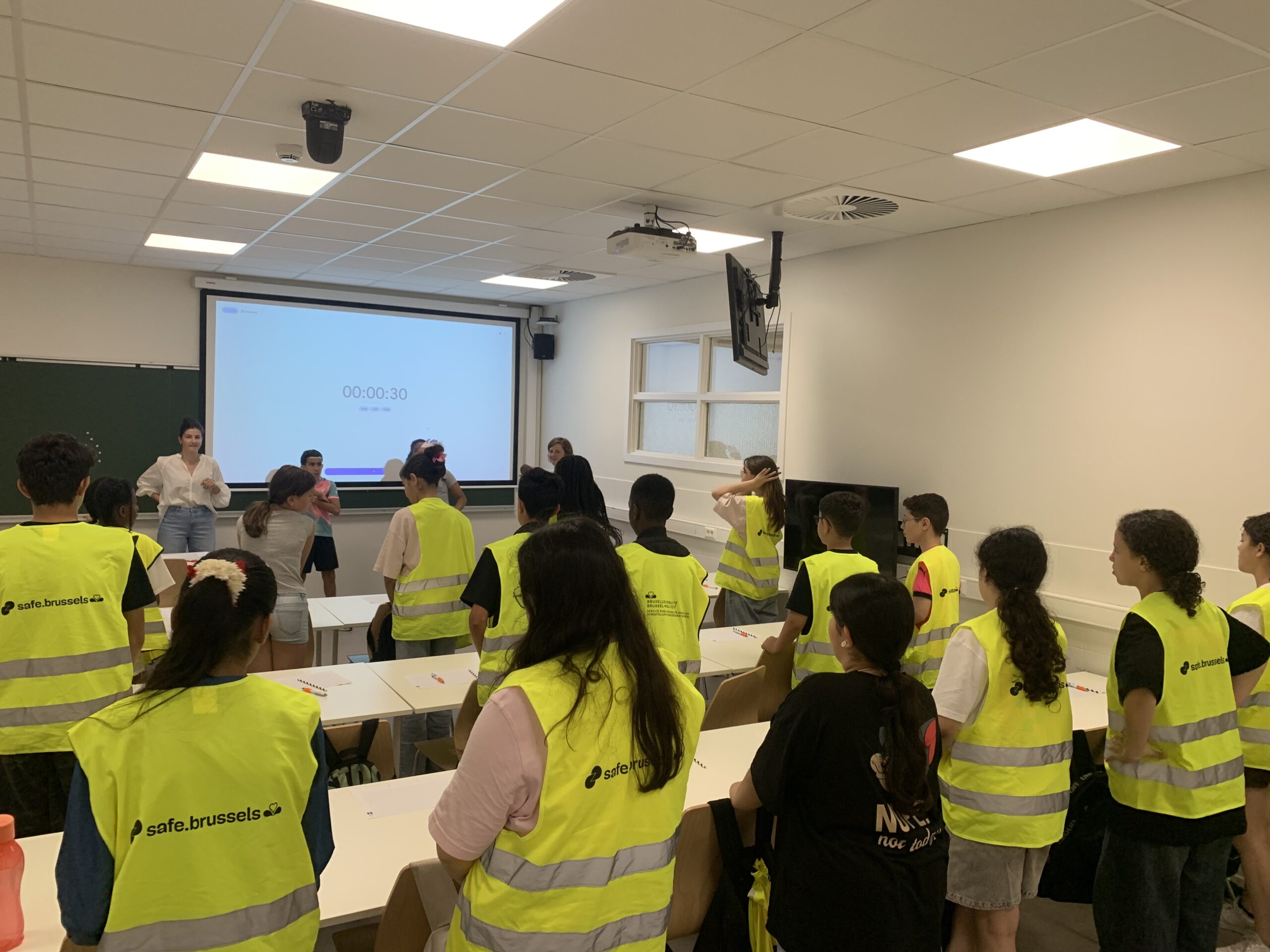
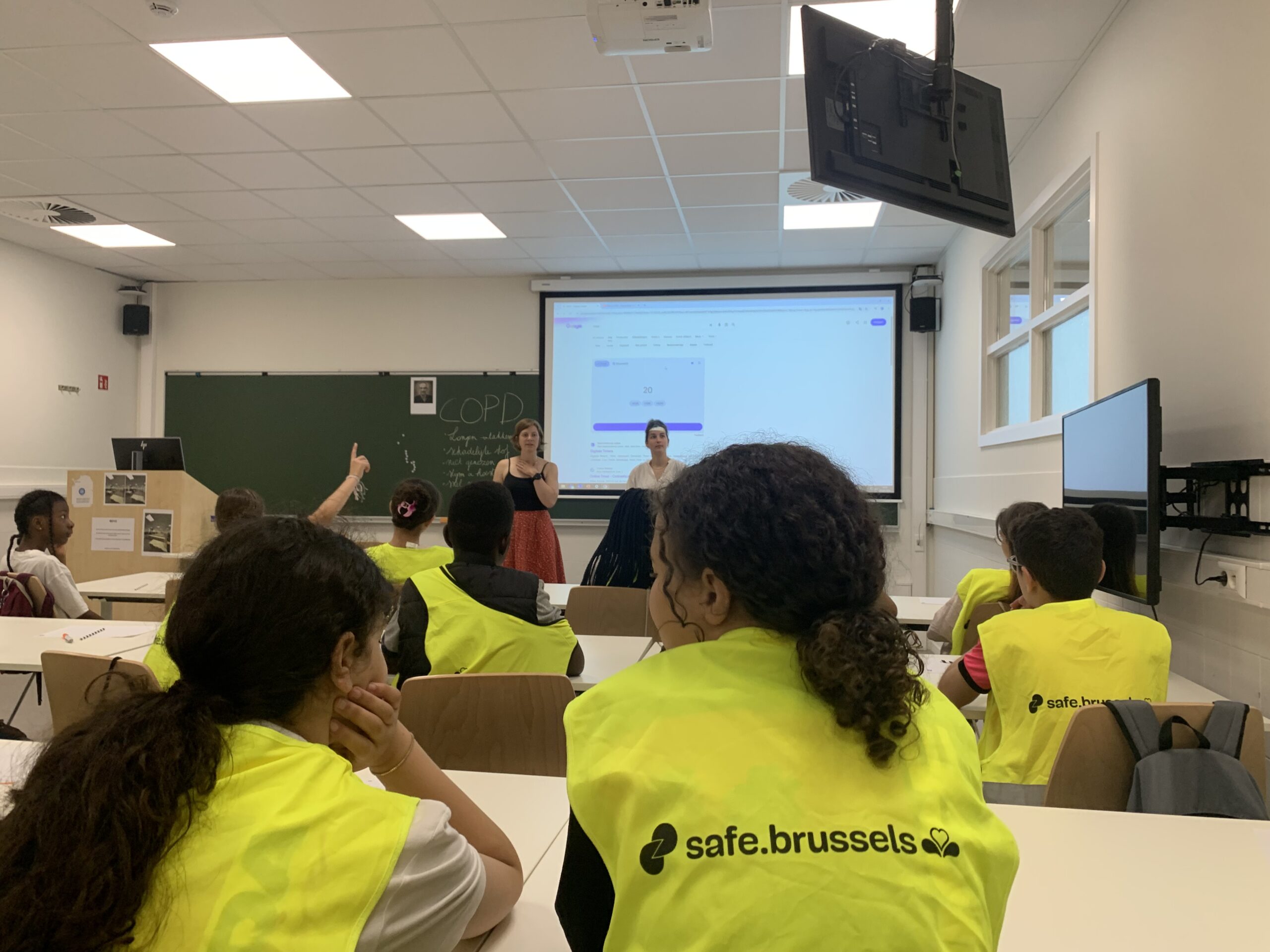
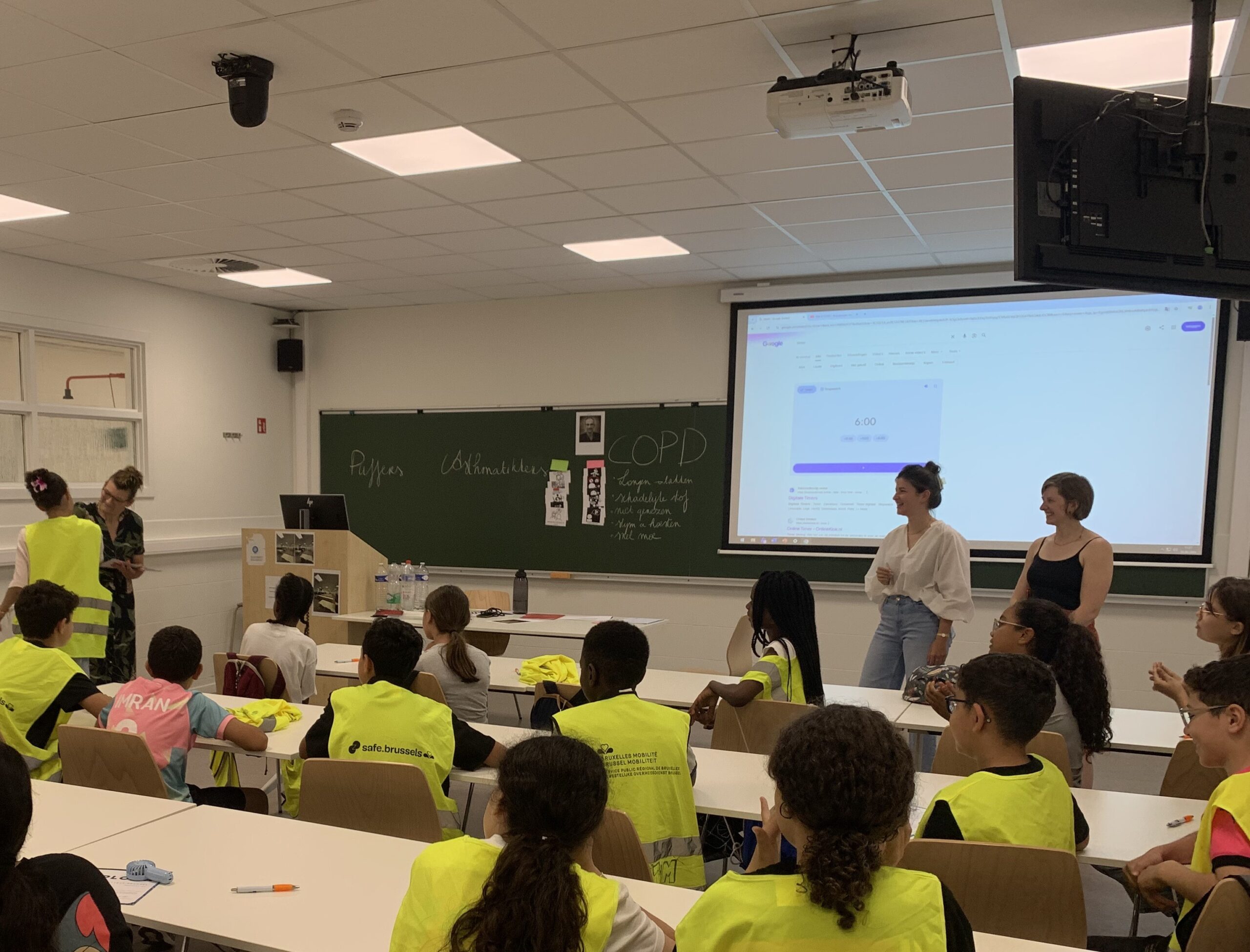
In June 2026, members of the Belgian EU PAL-COPD team took a step outside the office and into the classroom. Three of our junior researchers introduced 34 primary school students to the world of science, research, and healthcare.
Stepping into a classroom of young adolescents requires a specialised approach. Packed with expert tips & tricks from the Vrije Universiteit Brussel (VUB), researchers Michelle Martine Huub van der Meer and Mishka Beutels developed an interactive script, which Mishka and Marie Van de Walle (UGENT) brought into the classroom. The objective was to keep the children focused, interested, and highly engaged, combining playful learning with meaningful scientific insights.
To truly understand Chronic Obstructive Pulmonary Disease (COPD), the students needed to experience it. The workshop kicked off with a hands-on simulation:
For the first time, these young students felt that breathing, something we all take for granted, is a daily struggle for people living with COPD.
After an introduction to COPD, the students distinguished good and bad practices for people with COPD and tackled paper-and-pencil games on this matter. Because the EU PAL-COPD project underlines patient-centred care, the workshop focused on empathy and respect. We asked students to brainstorm questions they could ask a person with COPD to get to know them and offer support. Below, you can read some of them:
These questions demonstrate the basis of respectful communication and can facilitate goals-of-care conversations and advance care planning.
What stood out most for us as researchers, was the load of questions we received. Their curiosity didn’t stem from confusion, but from the desire to step into the shoes of someone living with COPD and find ways to make their lives better. As researchers, and more broadly as adults, we sometimes worry about how our questions will be perceived by others, often letting self-consciousness get in the way. This workshop reminded us that sharing the simplest questions and experiences can shape the most impactful conversations. The children may have learned about COPD from us, but they gave us a reminder of how to approach human-centred research. An inspiring exchange between juniors we won’t forget!